The cycle
The cycle is the fundamental cosmic and spiritual rhythm that governs existence in the world of Do Androids Dream of Electric Sheep?, encompassing the ascent of Wilbur Mercer up his hill, his descent into the tomb world, and his inevitable resurrection. It is the pattern against which all life, death, and moral action are measured, and it provides the structure for the Mercerite experience of fusion, where participants share in Mercer's suffering and triumph. The cycle is both a promise of renewal and a curse, as it forces every creature to violate its own identity, a condition that Rick Deckard confronts directly after his day of killing androids.
Structure of the Cycle
The cycle consists of two alternating phases: the ascent and the descent. During the ascent, Mercer—and through fusion, all who grasp the handles of an empathy box—toils up a barren, brown hillside under a dim, sunless sky, with tufts of dried-out weeds poking slantedly into the air. Stones rattle downward under his feet, and the climb is slow, nearly imperceptible, but there is a sense of progress: "Today we are higher than yesterday, and tomorrow—" The ascent is punctuated by torment: rocks, hurled by unseen antagonists, strike Mercer, causing real pain that is felt by everyone in fusion. At the top of the hill, the climb ceases and the other part of the cycle begins: Mercer sinks into the tomb world, a pit of corpses and dead bones where rotting fragments—an eyeless head here, part of a hand there—lie scattered. This is a place of measureless time, where nothing happens generally, and Mercer cannot get out until the bones strewn around him grow back into living creatures. He has become joined to the metabolism of other lives, and until they rise, he cannot rise either. Eventually, the bones regain flesh, the empty eyepits fill up, and the restored beaks and mouths cackle, bark, and caterwaul. The ascent begins again.
The Cycle and the Tomb World
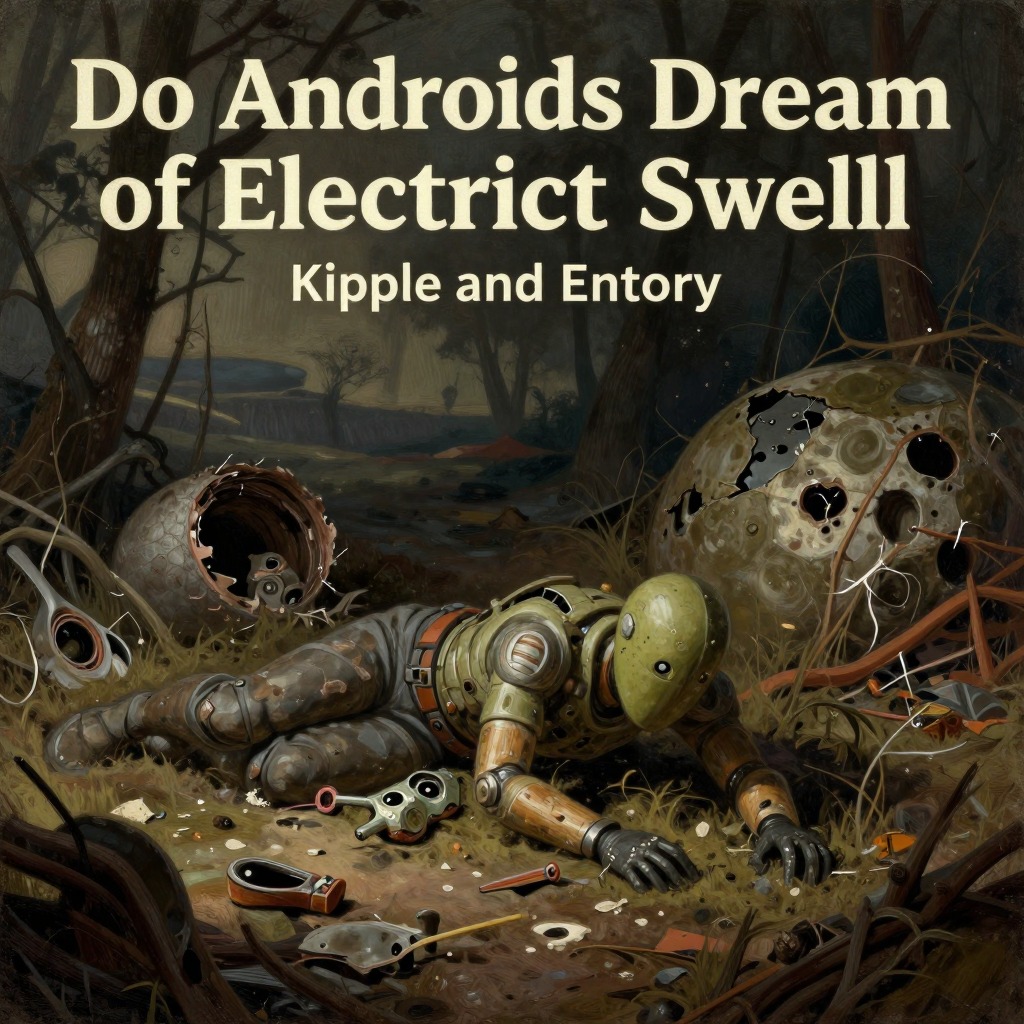
The tomb world is the nadir of the cycle, a state of absolute decay and stasis that John Isidore experiences directly after the androids mutilate his spider. As he stands in his kitchen, the apartment around him begins to disintegrate: the cupboards creak and split, the floor gives way, and the legs of a chair bend like rotten tubes. He sees pieces of animals—the head of a crow, mummified hands that might have once been parts of monkeys—and a donkey stands a little way off, not stirring. A shiny blue crow falls from above to perch on the donkey's muzzle and picks out its eyes. Isidore recognizes this place: "It's happening to me again. I will be down here a long time, as before. It's always long, because nothing here ever changes; a point comes when it does not even decay." This is the tomb world, and without Mercer, it is a place of hopelessness. But then the mutilated spider, which Pris Stratton had cut apart with scissors, creeps across Isidore's foot, alive again, and he senses Mercer's presence. Mercer lifts him from the tomb world, saying, "I lifted you from the tomb world just now and I will continue to lift you until you lose interest and want to quit."
The Cycle and Moral Action
The cycle imposes a moral paradox on those who participate in it. Mercer tells Rick Deckard, during a fusion experience, that he must "go and do your task, even though you know it's wrong." When Deckard asks why, Mercer explains: "You will be required to do wrong no matter where you go. It is the basic condition of life, to be required to violate your own identity. At some time, every creature which lives must do so. It is the ultimate shadow, the defeat of creation; this is the curse at work, the curse that feeds on all life. Everywhere in the universe." This curse is the cycle itself: the inevitable movement toward death and decay, which every living thing must undergo, and the equally inevitable return to life, which requires a violation of the self. Deckard, after retiring six androids in a single day, feels this curse acutely. He drives to a desolate area near the Oregon border and, alone, begins to climb a hill. Rocks strike him—real rocks, not rubber or soft foam plastic—and he feels "the first knowledge of absolute isolation and suffering." He realizes he has become Mercer, permanently fused, and that he cannot unfuse. The cycle has claimed him.
The Cycle and the Electric Toad
The cycle's promise of renewal is tested when Deckard finds a toad in the desert, an animal believed extinct. He believes it is a sign from Mercer, a living creature in a dead world. But when he brings it home, his wife Iran discovers a tiny control panel on its abdomen: the toad is electric. Deckard is crestfallen, but then he says, "The electric things have their lives, too. Paltry as those lives are." This acceptance suggests that the cycle may extend even to the artificial, that even a machine can participate in the rhythm of existence, however imperfectly. Iran, understanding this, orders artificial flies for the toad, and Deckard, exhausted, goes to bed, finally receiving the "long deserved peace" that the cycle, after its torments, can grant.